How to stay safe when doing landscape and outdoor photography
Practical tips and essential gear to help you stay safe while photographing landscapes, wildlife, or any outdoor environment on your own.

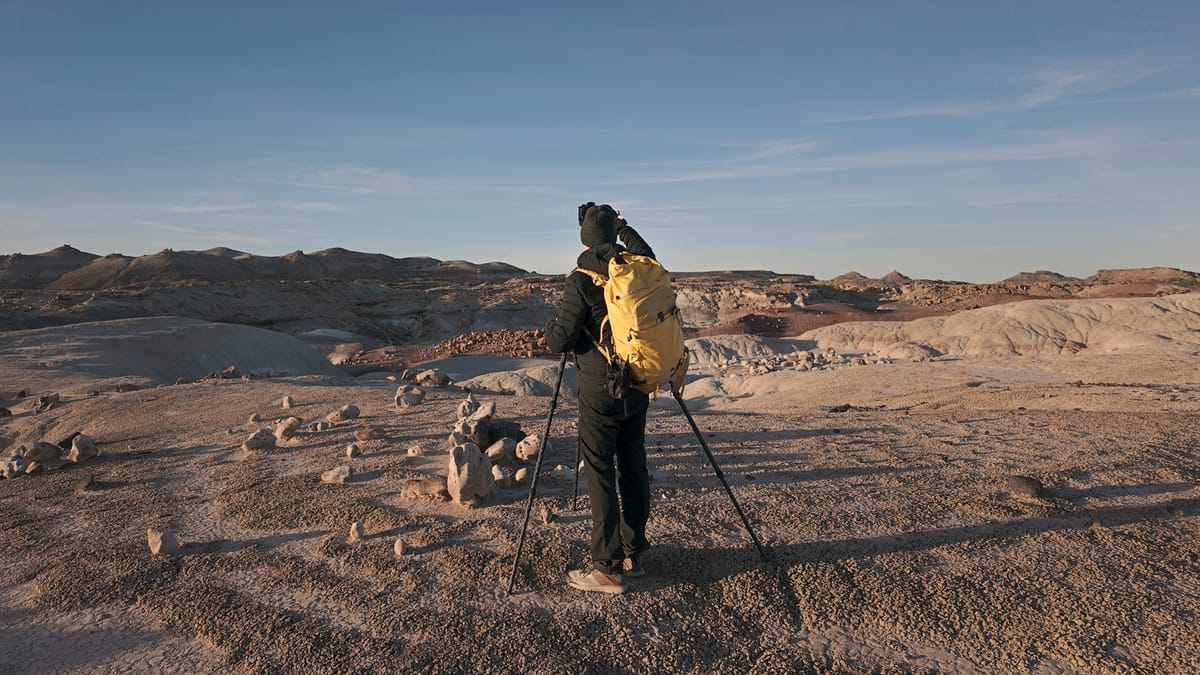
Part of what I love about landscape photography is the adventure of traveling to remote areas. I'm especially fond of the American west, where it's common to be miles away from the nearest cell tower, town, or another human being. I also tend to do landscape photography alone, which makes personal safety an even greater concern, not simply for myself but my family as well. I've thought a lot about this topic, and have a number of tips/recommendations to share.
Text location to someone you know
If you have a significant other in your life back home, text them your location when departing and returning. If traveling to an area where cell coverage may not exist (which is very common in the American west), text them before venturing out where cell coverage is available. Texting GPS coordinates or Google Maps links can be even more useful.
Bring overnight supplies in your car
You never know what might happen when driving backcountry roads looking for landscapes to photograph. You might get stuck, blow a tire, or accidentally drain the engine battery. It might also take a while for someone to come and help you out. With that, I always bring extra food, a couple of gallons of water, plus a blanket and/or extra clothes for cold nights just in case. If available, a first aid kit isn't a bad idea either.
Minimize gear in your pack
Carrying extra lenses is typically fine when hiking short distances, but on longer treks I’ve found it best to limit myself to one or two lenses. Most often I pack a single zoom such as the GF 32–64 or GF 45–100 to keep my bag light and avoid fatigue. A lighter load also reduces the chance of exhaustion, which makes slipping and falling more likely.
Use smartphone to track location
Two of the most helpful smartphone apps I use when hiking alone are AllTrails and GAIA GPS (both available for free for iOS and Android).
AllTrails provides accurate hiking directions and information for places other users have visited. I find it especially useful when hiking in unfamiliar areas with or without established trails, and I want to know where most other hikers go for the best and most efficient route.
GAIA GPS tracks your GPS coordinates while hiking, leaving digital breadcrumbs behind you on a map. Perfect for finding your way back to where you started, which is especially helpful in the dark after sunset. I also like using this app for location scouting, taking photos and saving pins with GPS coordinates so I can return later when the light is better.
Of the two, I use GAIA GPS the most, and highly recommend using it anytime you venture out alone.
Learn how SOS emergency works on your smartphone
Newer smartphones have built-in SOS functionality which can connect to Iridium satellites orbiting the earth, even in areas without cellular access. That's great, but you need to know how to use it before getting yourself into trouble. Spend a few minutes reading the latest information from Apple and Google before venturing out.
Get a dedicated satellite communicator
Smartphone SOS communication is great, but smartphones are fragile and have limited battery life. That's where devices like the Garmin InReach Mini 2 come in, for it provides SOS communication in small, intentionally underpowered hardware with a rechargeable battery that lasts 14 days. It also provides way-finding, GPS tracking, location sharing, weather reports, and other features, but the main benefit of owning own (and paying the monthly subscription) is being able to send SOS alerts from literally anywhere.
Another satellite option is the Zoleo Satellite Communicator. This device provides SOS alerts just like the InReach, but works mostly through a connected smartphone to send/receive messages in areas without cell coverage. Costs less too.
Attach a Bluetooth tracker to your car keys
I’m always paranoid about losing my keys while hiking because without them I’d be locked out of my van and potentially stranded. Although many modern vehicles offer remote unlocking through mobile apps, those systems are useless in remote areas without cellular service.
To mitigate this risk, I attach an AirTag to my keys so I’m alerted if I drop them and can pinpoint their exact location with my iPhone. I also wear hiking pants with multiple zippered pockets (e.g, my pants) and keep my keys (and only my keys) in a designated pocket.
Trust your instincts
Deep down, we all have a sixth sense that warns us when something isn’t right. When I’m alone in a remote environment and a route seems unstable or conditions start to change, I don’t take risks. No photograph is worth dying for.
Carry more water than you need
I used to always carry a normal sized, 18 ounce water bottle with me when hiking. Not only was it a pain to carry and access while hiking, but I'd often run out of water well before my hike was over. Today, I carry a two liter Osprey water bladder, and it really helps keep me fully hydrated while hiking, especially in warm weather.
Carry a bright flashlight
Chances are, if you're into landscape photography, you often shoot around golden hour and/or blue hour. This often requires hiking in the dark, either early morning or late evening. Head lamps are a decent solution, but I eventually got tired of their lackluster battery life, dim output, and positioning them just so on my head to get the beam where I want it. Today, I'm carrying a super bright pocket sized flashlight with a rechargeable USB-C battery, and it works much better for me.
Video
Here's the video version of this article: