Why fine art photo paper can look worse than cheap paper
Fine art paper is supposed to look better. So why do prints sometimes come out duller and less colorful than cheap photo paper? It comes down to how the paper is made, and what you're actually printing for.


Fine art inkjet photo paper is often marketed as the premium choice for photography prints. It's seen as more beautiful, higher quality, and capable of turning a photo into something that feels like true art. So it's easy to assume fine art paper will always produce the best results. Sometimes, however, images printed on fine art paper can appear duller, less colorful, and less impactful compared to cheaper, standard photo paper.
Why does this happen? The answer starts with understanding how inkjet paper is constructed.
Inkjet photo paper construction and materials
Regardless of which inkjet paper you use, your printer creates a print by spraying ink onto a microporous ink-receiving coating. This coating traps the ink and dries quickly. It also determines the paper's finish (semi-gloss, satin, pearl, etc.) and can include additional materials like barium sulfate for smoother, more reflective images (sold as "Baryta" papers). This coating does more than determine appearance: it directly affects the contrast and color of an image based on how light reflects off the surface.
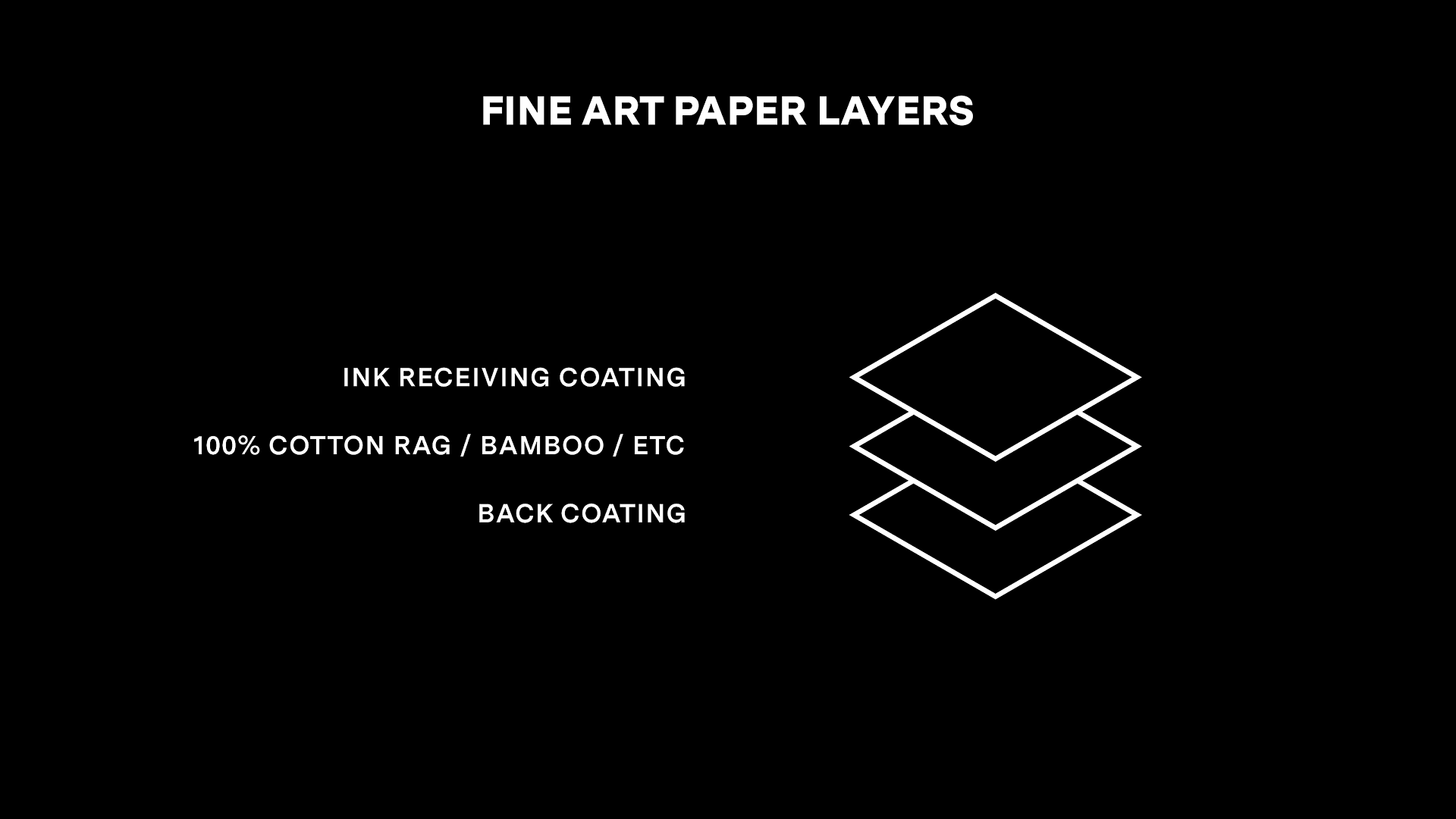
Beneath the ink-receiving coating is the paper itself. Fine art paper has a straightforward construction: a sheet of 100% cotton rag or plant-based alpha-cellulose, often finished with a back coating to prevent curling and add rigidity during printing.
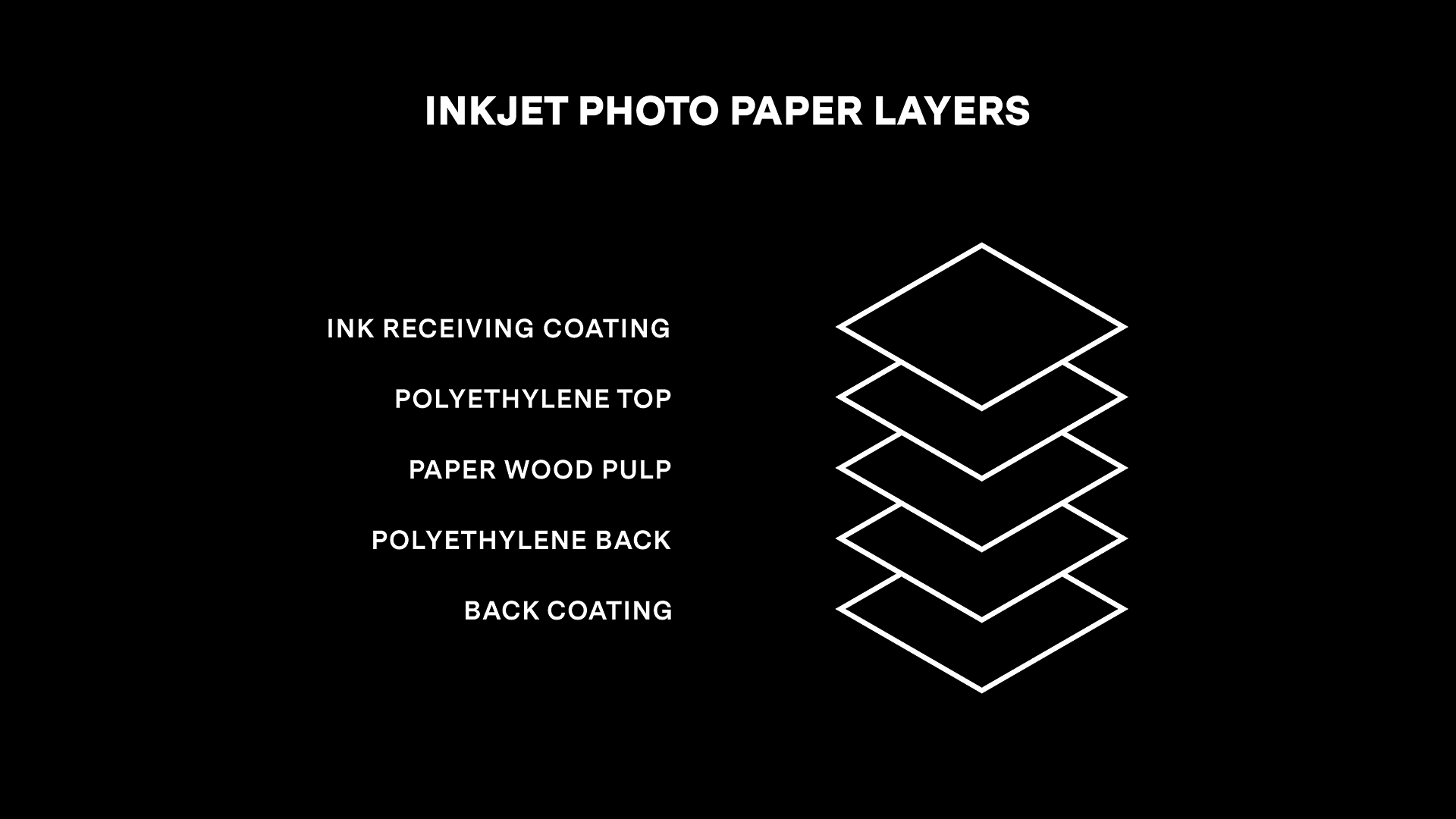
Standard photo paper is more complex. Its core is a sheet of wood pulp wrapped in polyethylene (plastic), typically with a back coating for added rigidity.
With both paper types, ink never touches the raw paper fibers directly. It is deposited into the ink-receiving coating on top. Fine art paper uses higher quality coatings that allow ink to penetrate toward the fibers beneath rather than sitting on top of a sheet of plastic. This lets the natural texture and color of the base paper show through, giving prints a more organic feel. Photo paper prints, by comparison, look slick and plasticky, and feel thin.
What cheap photo paper does well
Resin-coated photo papers with glossy finishes can produce deeper blacks, sharper details, and more vibrant colors than matte fine art papers. The glossy surface allows light to penetrate and reflect off the underlying image. Matte fine art papers, with their natural fibers and flatter finishes, scatter that light instead, resulting in softer contrast and reduced color saturation.
Photo paper prints also tend to look brighter and whiter, largely due to Optical Brightening Agents (OBAs). OBAs absorb UV light and re-emit it as visible blue light, making the paper appear whiter and more luminous. In effect, photo paper is the closest real-world emulation of the backlit monitors we use to edit our images. General rule of thumb: if a paper stock doesn't explicitly say "OBA free", it likely contains OBAs.
Color reproduction is another area where photo paper often has an edge. Fine art papers, particularly matte ones, typically have a narrower color gamut than glossy RC photo papers, meaning they reproduce a smaller range of richly saturated colors. As an example, Canson's PhotoGloss Premium (a high-quality resin-coated paper) supports significantly greater color volume than Canson Arches 88, a matte cotton fine art paper made by the same company (image below).
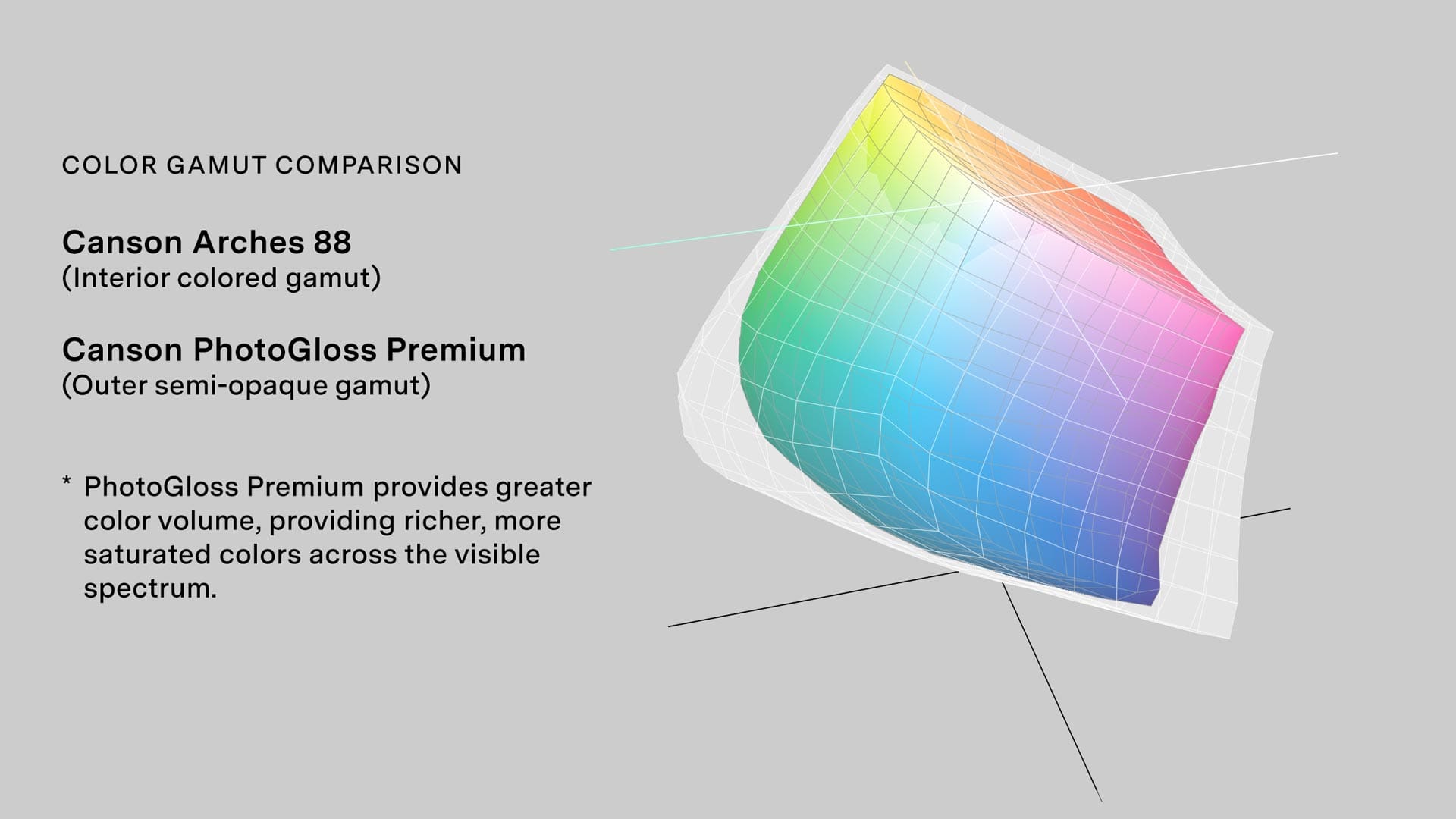
In real world terms, an ocean photo with deep, richly saturated aquamarine blues and greens printed on PhotoGloss Premium will look more similar to a wide-gamut monitor. On Arches 88, those same blues and greens get compressed into a narrower range, appearing more muted and flat.
It's worth noting that some fine art papers are designed to function like RC photo paper but are constructed with higher quality materials. These include glossy, semi-gloss, and baryta fine art papers. They can offer similar contrast, sharpness, and gamut of RC photo paper while retaining the archival qualities and feel of fine art stock.
Why choose fine art paper?
At first glance, photo paper seems like the obvious choice. It's cheaper and produces brighter whites, more vibrant colors, and sharper detail. So why do artists, collectors, galleries, and museums consistently choose fine art paper instead?
The answer comes down to longevity, aesthetic quality, and presentation.
Longevity: Fine art paper is built to last. Paired with archival-quality inks, it can preserve an image for decades without significant yellowing or fading. Photo paper doesn't hold up as well. The OBAs that make it look so bright degrade under UV exposure over time, gradually dulling the print's vivid appearance. If you're selling prints or want your work to last, fine art paper is the better long-term investment.
Look and feel: Fine art papers come in finishes like satin, luster, pearl, and matte, giving prints a refined, professional appearance without the glossy, plastic-like sheen of standard photo paper. Many also have subtle surface textures that you can both see and feel. Physically, fine art paper is thicker and more substantial. It feels like something of value.
Depth and dimension: Ink behaves differently on fine art paper. The thinner, more transparent coating allows ink to settle closer to the paper fibers beneath, rather than resting on top of a thick plastic layer. The result is an image that appears to emerge from within the paper itself, giving fine art prints a depth and tactile quality that photo paper simply cannot replicate.
Recommendations
If you're making disposable prints, photos for the family fridge, or anything where longevity and look-and-feel aren't important, standard photo paper will save you a great deal of money. There's little reason to buy expensive boxes of 100% cotton rag fine art paper if the prints aren't going to be framed or presented as part of a portfolio.
When investing in fine art paper, look for OBA-free, natural fiber options for the best longevity, look, and feel. That holds true regardless of finish, whether glossy, pearl, or matte. Baryta papers are more reflective but tend to be textureless and smooth, which may not be to everyone's taste.
It helps to build familiarity with the subtle differences between paper types using your own images, and the cheapest way to do that is with sample packs. They typically contain two sheets of each paper stock (helpful for both color and black and white tests), are labeled on the back for easy identification, and come in smaller sizes that save ink.
- Hahnemühle FineArt Glossy sample pack - Contains 8 of the German paper company's most popular gloss, satin, pearl, and metallic fine art papers. Includes 100% cotton rag papers, alpha-cellulose papers, and barytas.
- Hahnemühle FineArt Matte Textured sample pack - Contains 5 matte, textured papers resembling canvas or water color paper. Popular choice for fine art painting reproductions, or any scenario where noticeable texture is desired.
- Canson Infinity Photo & Fine Art Discovery Pack - Contains 7 popular Canson fine art papers (plus a premium RC premium paper). Baryta Photographique II is a popular hybrid paper often used by labs when ordering fine art prints.
- Canson Infinity ARCHES Discovery Pack - Contains 4 ARCHES papers from their fine art line. All have matte finishes, texture, and are OBA free for ultimate longevity and archival quality.
- Red River Paper Sample Kits - In the United States, Red River Paper is a more affordable option for fine art paper compared to European sources like Canson and Hahnemühle. Their sample packs are more affordable as well.
Summary
Standard RC photo paper is hard to beat for everyday prints, casual sharing, and anything that doesn't need to last. Fine art paper is the right choice when the print matters, whether it's destined for a frame, a gallery wall, or a collector's portfolio. If you choose to print on matte fine art paper, know that the image will almost certainly appear flatter and less vibrant compared to glossier options. If you want a good compromise between fine art and photo paper, try OBA-free Baryta papers for a similar look with long term archival quality.